
What we’ll cover…
Fitting a heated towel rail? This guide walks you through the tools you’ll need, how to prep and position the rail, install brackets, and complete a safe, professional finish.
How to install a heated towel rail
A step-by-step guide on how to dress and hang a heated towel rail in your home, so you can always enjoy lovely warm towels, use as a vice to dry clothes and for generally heating your bathroom.
Let’s get started with everything you need to fit a heated towel rail.
What you’ll need…
- PTFE Tape
- Screwdriver
- Impact Driver
- Tape Measure / Metre Ruler
- Spirit Level
- Pencil
- Adjustable Spanner
- Wall Fixing Kit
- Bleed Valve & Blank
- 10mm Ratchet
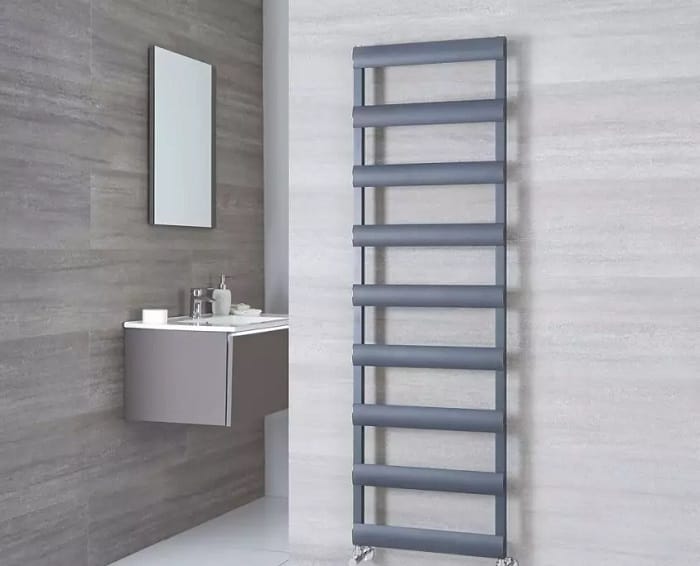
Starting to dress and hang your heated towel rail
Step 1
Carefully lay your heated towel rail flat and remove the protective plastic caps and rubber bunks.
Step 2
Screw in the bleed valve and blanking cap on either side, and use an adjustable spanner to tighten them up in position. However, be careful not to over-tighten and risk causing damage to the thread.
Step 3
Flip the heated towel rail over carefully, and remove the rubber bunks again on the other side of the component.
Step 4
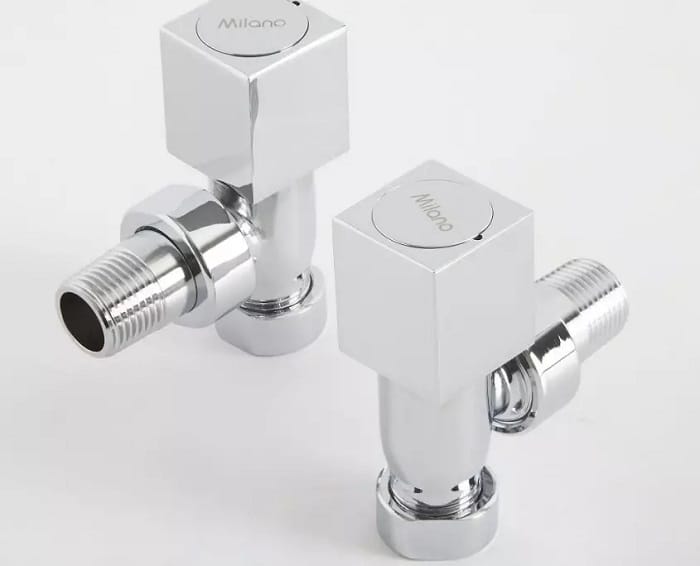
Wrap the spigots on your radiator valves with PFTE tape around 17 times – this is an important precaution to take in aiding the prevention of leaks.
Step 5
Fully insert the spigots into your heated towel rail and tighten them up using a ratchet or adjustable spanner.
Measuring up your heated towel rail
Step 1
Measure the width of your heated towel rail to accurately identify the centre point. Then, measure the distance from the collector to the middle of the brackets to ensure the component will sit correctly on the wall when installed.
Step 2
Measure the distance between both brackets, again recording the centre point on both the top and bottom sets.
Step 3
Measure the distance from the bottom of the heated towel rail to the centre of the bottom brackets. Use your pencil to mark that centre point on the wall the towel rail will be fitted to. From here, you can also work out where the ‘top bottom’ bracket will be situated, and mark that point on the wall too.
Step 4
Using the bracket measurements, measure along where each of the bottom brackets will be situated with a spirit level to make sure the line is straight.
Step 5
Take a measurement from the bottom bracket to the top bracket, again using a spirit level to mark the spot on the wall. Then use the bracket measurements to mark the holes for the top brackets on the wall.
Completing your heated towel rail hanging
Step 1
Fix the brackets to the wall in accordance with your markings, using the spirit level to ensure they are properly level.
Step 2
Double check your measurements to guarantee the brackets are being placed in the correct position, then carefully mount your heated towel rail on the wall.
Step 3
Insert the top brackets first, enabling you to make any minor adjustments that might be required to the bottom brackets.
Step 4
Screw in the retention screws to ensure the heated towel rail is securely attached to the wall. Once it has been secured in place, you can attach the bracket covers to provide a neat, clean finish.
Step 5
To complete the final installation to your central heating system, enlist the services of a qualified professional, and you should be good to go to enjoy your brand new heated towel rail.
Complete your heated towel rail installation with BestHeating
Hopefully, this guide has provided you with all the information you need to know to complete your heated towel rail installation successfully with BestHeating.
You can leave your queries in the comments section, or contact us via Facebook, Instagram or X.
Frequently Asked Questions
In the UK, supplying and installing a standard plumbed heated towel rail costs around £535 on average (typically £220–£250 for the towel rail and £250–£350 for a plumber).
However, total installation costs vary depending on your region, pipework changes, and the type of rail you choose –
- Plumbed (central heating) towel rail – £250–£350 for professional fitting (or less for a straightforward swap using existing pipework).
- Electric heated towel rail – £150–£250 for a qualified electrician to wire it into a compliant bathroom electrical zone.
- Dual-fuel heated towel rail – £300–£500 for installation, as it requires both a plumber and an electrician.
Consult our heated towel rail buying guide for inspiration on the ideal model to select, and for further pricing information, see our article How much does it cost to fit a bathroom radiator?.
Multiply your towel rail’s kilowatt (kW) heat output by the number of hours your heating is on, then multiply that figure by your current gas unit rate (p/kWh).
Because a plumbed towel rail runs directly off your central heating circuit, it only draws energy while your gas boiler is actively firing – rather than adding a separate running cost on top of your normal heating schedule.
You can check your exact gas unit rate on your latest energy bill or view the current Ofgem energy price cap unit rates to work out your daily or seasonal estimate.
For a more detailed insight, browse our blog, Is a heated towel rail expensive to run?.
You can calculate the running cost of any electric heated towel rail using a simple three-step formula:
1. Convert watts to kilowatts - Element Wattage (W) ÷ 1,000 = kW
2. Work out energy used – kW × Hours in Use = kWh
3. Multiply by your tariff - kWh × Your Electricity Unit Rate (p/kWh) = Cost
You can find the exact element wattage on the product label or in the technical specifications on BestHeating.com.
Check your latest electricity bill for your unit rate, or view the current Ofgem energy price cap unit rates for a UK benchmark.
Keep in mind that thermostatic electric towel rails cycle on and off once they reach temperature, so real-world running costs are often lower than running at full power continuously.
For further information, take a look at our blog, Is a heated towel rail expensive to run?.
A dual fuel heated towel rail is a towel rail which is connected to both a property’s central heating system as well as a mains electricity supply.
Typical heated towel rail models will heat up when the central heating is turned on, and deliver warmth in cohesion with the other components in the house that operate via the same means. Dual fuel heated towel rails can contrastingly work in the absence of central heating, and be powered electrically instead.
For a more detailed insight, take a look at our dedicated blog on the subject – What Is A Dual Fuel Heated Towel Rail?

John is a Research Specialist for the Best Heating Advice Centre, where for over a decade he has dedicated himself to demystifying home heating for our customers. He specialises in creating clear, data-driven guides and how-to articles by collaborating directly with our team of certified heating experts and product engineers.
His work, built on a foundation of journalistic research, has helped millions of readers make confident and informed decisions about their home heating. When he’s not breaking down the heat output differentials from radiators to heated towel rails, John fancies himself as a fine football and music connoisseur.


