Contents
ToggleWhat we'll cover...
In this in-depth guide, we’ll look at everything you need to know about central heating maintenance, accounting for more than just the boiler.
From monthly pressure checks and annual servicing to radiator care, heat pump upkeep, thermostat maintenance, filtration, inhibitors, pipework protection and legal requirements, you’ll learn exactly how often each task should be undertaken, who should carry it out, how much it typically costs and how long it takes.
We’ll also provide a comprehensive whole-system maintenance table, practical tips to enhance efficiency and other guidance to get the very best out of your central heating system all year round.
Key central heating components for maintenance
A central heating system is one of the hardest-working and frequently used aspects of most UK homes. Yet for the majority of households, the idea of central heating maintenance probably begins and ends with booking a boiler service. Although that’s an essential facet, it’s only part of what your heating system needs to keep working in a safe, efficient and reliable manner.
A central heating system typically includes:
• The boiler
• Radiators
• Pipework
• Thermostats and controls
• Pumps and valves
• Optional systems like heat pumps, filters, hot water cylinders and balancing valves
If even one of these elements is neglected, it can negatively affect the performance of the entire system.
Ignoring central heating maintenance can cause:
- Higher bills
- Reduced heat output
- Cold spots
- Leaks
- Noisy pipes and radiators
- Loss of system pressure
- Unexpected breakdowns
- Shorter boiler lifespan
- Invalidated warranties or insurance policies
In this guide, you’ll find a complete central heating maintenance schedule to follow, so you know exactly what needs doing and when to keep your system working to its very best.

Boiler maintenance tasks
Essentially, your boiler is the engine of your heating system, so proper maintenance of this key component is essential for safety and performance.
Monthly boiler checks
- Check system pressure
Typically, a boiler should display a 1.0-1.5 bar when cold. If the gauge has dropped below this, your system may need repressurising. - Visual leak inspection
Check underneath the boiler for drips, staining, corrosion, or unusual moisture.
Small leaks often indicate failing seals or pressure issues. - Restart after long inactivity
After long breaks from use (e.g., during the warmer summer months), switch the heating on for 10-15 minutes to fire up your radiators and keep pumps and valves moving.
Annual boiler service
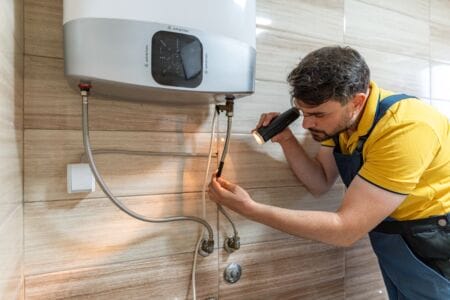
A boiler service should be conducted at least once a year and always be carried out by a Gas Safe registered engineer. Think of this as a mandatory requirement. It’s essential for:
- Combustion safety
- Preventing carbon monoxide leaks
- Efficiency retention
- Warranty validity
- Detecting early component wear
Legal boiler requirement for landlords
Landlords are legally obligated to obtain a Gas Safety Certificate (CP12) every 12 months. This covers the boiler, pipework and gas appliances. Failure to comply can result in large fines and invalid insurance.
Boiler tasks every homeowner should be able to do...
- Know how to reset your boiler
- Understand error/fault codes (check the boiler manual or manufacturer’s website)
- Ensure the boiler has adequate ventilation (for older non-condensing models)
- Check flue terminals are unobstructed
- Ensure magnetic filters (if installed) are cleaned at least yearly
A serviced boiler can run up to 10-15% more efficiently, prolonging its lifespan and helping homeowners to save money on energy bills.

Radiator maintenance tasks
For most households, radiators knit together the performance quality of your central heating system, as the most popular device to deliver heat throughout the home.
Annual radiator bleeding
Bleeding radiators removes trapped air, restoring full heat output. Cold tops or gurgling sounds indicate a build-up of air in a radiator.
Seasonal performance checks
At the beginning of the heating season:
- Switch the heating on and inspect each radiator one by one
- Look for cold patches (may indicate radiator sludge)
- Ensure thermostatic radiator valves or TRVs turn freely (pins can often seize over summer)
Radiator valve inspection
Check:
- TRV heads for stiffness
- Valve bodies for leaks
- Lockshield valves for tampering
If valves are leaking: What causes a leaking radiator valve and how do I fix it?
System water quality: Every 3 to 5 years
If you are repeatedly noticing cold spots on your radiators, it could be a sign that system water is contaminated with sludge. Solutions include:
- Chemical flush (DIY or pro)
- Power flush (professional)
Heating systems with a clean water supply can run up to 15% more efficiently and significantly reduce the strain on your boiler.

Heat pump maintenance tasks
Obviously, for homes using renewable energy sources in the form of with air source or ground source heat pumps…
Monthly:
- Remove leaves, dust, ice or obstructions from the outdoor unit
- Ensure airflow around the heat pump is clear (minimum 30cm clearance)
Quarterly:
- Clean out air filters
- Check insulation on refrigerant pipes
- Ensure condensation drains are clear
Annually:
- Professional service covering refrigerant pressure, electrical connections, pumps, expansion vessels, and controller optimisation
- Heat pumps lose efficiency dramatically when filters are dirty. Always ensure they are benefitting from clear airflow.
Read more in our guide: A homeowner’s guide to heat pump maintenance.

Thermostat and controls maintenance tasks
Because it’s just as important to upkeep the gadgets and accessories that help you control your central heating system’s activity.
Battery-powered thermostats
Replace batteries every six months as a minimum to avoid a sudden loss of control.
Smart thermostats
- Check WiFi connectivity
- Update firmware
- Review heating schedules seasonally
- Ensure geofencing features (if available) are calibrated
System balancing
If rooms heat up unevenly, the system might require balancing via lockshield valves.
Discover more insights in our article, How to improve radiator efficiency & performance.

Pipework, system treatment & filters maintenance
The nitty gritty maintenance measures that will keep your central heating system ticking over and operating to its optimal potential.
Inhibitor levels
Corrosion inhibitor helps to prevent a build-up of sludge. Check inhibitor levels every one to two years and top up when needed.
Magnetic system filters
If fitted, magnetic system filters should be cleaned annually during a boiler service.
Condensate pipe
During winter, check for freezing risks, particularly with outdoor pipework.
Our guide, How to sort out frozen pipes in UK homes, contains further information.
Your ideal central heating maintenance schedule
Component | Task | Frequency | DIY or Pro? | Est. Cost | Est. Time |
Boiler | Check pressure | Monthly | DIY | Free | 5 mins |
Boiler | Visual leak/corrosion check | Monthly | DIY | Free | 5 mins |
Boiler | Run boiler briefly out of season | Monthly in summer | DIY | Free | 10 mins |
Boiler | Bleed system (if pressure correct) | As needed | DIY | Free | 10 mins |
Boiler | Professional service | Annually | Pro | £80-£150 | 1 hour |
Boiler | Magnetic filter clean | Annually | Pro | Often included | 5–10 mins |
Boiler | Gas Safety Certificate (CP12) | Annually (landlords) | Pro | £80-£120 | 1 hour |
Boiler | System flush | Every 3-5 years | Pro | £300-£500 | Half day |
Radiators | Bleed radiators | Annually | DIY | Free | 10 mins/each |
Radiators | Check TRVs/lockshields | Seasonally | DIY | Free | 10 mins |
Radiators | Check for cold spots | Start of heating season | DIY | Free | Varies |
Radiators | Clean fins/dust | Quarterly | DIY | Free | 5-10 mins |
Radiators | Power flush | Every 3-5 years | Pro | £300-£500 | Half day |
Heat Pump | Clear debris | Monthly | DIY | Free | 10 mins |
Heat Pump | Clean filters | Quarterly | DIY | Free | 10-20 mins |
Heat Pump | Professional service | Annually | Pro | £150-£250 | 1-2 hours |
Thermostat | Replace batteries | Every 6 months | DIY | £2-£5 | 5 mins |
Thermostat | Seasonal schedule review | Seasonally | DIY | Free | 10 mins |
Controls | Firmware updates | As needed | DIY | Free | Varies |
Pipework | Check insulation & joints | Annually | DIY | Free | 10 mins |
Full System | Balance radiators | Every 1-2 years | DIY/Pro | Free-£120 | 1-3 hours |
Full System | Inhibitor top-up | Every 1-2 years | DIY/Pro | £10-£20 | 15 mins |
Keep your heating system at peak condition with BestHeating
A consistent maintenance routine is one of the soundest investments you can make in your home heating system. With the right schedule and consistency, you can achieve lower running costs, less breakdowns, longer equipment lifespan, safer and smoother operation, and better overall comfort levels.
There are all sorts of helpful resources to help you get the very best out of your central heating system in the BestHeating Advice Centre, and a wealth of premium quality heating products available to buy online.
Let us know about your top central heating maintenance measures in the comments below, or via Instagram, Facebook or X.

John is a Research Specialist for the Best Heating Advice Centre, where for over nine years he has dedicated himself to demystifying home heating for our customers. He specialises in creating clear, data-driven guides and how-to articles by collaborating directly with our team of certified heating experts and product engineers.
His work, built on a foundation of journalistic research, has helped millions of readers make confident and informed decisions about their home heating. When he’s not breaking down the heat output differentials from radiators to heated towel rails, John fancies himself as a fine football and music connoisseur.