What we’ll cover…
- Leaking radiator? This guide covers how to prepare your space, find the source, fix common issues, and know when it’s time to replace – quick, clear advice for tackling leaks before they cause bigger problems. We hope you find it useful!
A guide to fixing a leaky radiator
There aren’t many things that can go wrong around the house that are as annoying as finding a patch of wet carpet or a pool of water around the bottom of a radiator.
In this blog we’ll look at how you can fix a leaking radiator and minimise any damage to carpets and floorboards.
The following tips should give you the tools you’ll need to identify the source of any radiator leak and get it repaired quickly before any major damage is done to your property.
So, let’s explore how to fix a leak in your radiator.
Prepare to fix a leaky radiator!
Before you begin it’s best to prepare for the worst case scenario – water pouring out of your radiator.
Put some towels or another absorbent material on the floor around the radiator and have a large bucket to hand to catch as much water as you can.
Now you’re ready to get fixing your radiator leak.
How to find the source of your radiator leak
Take one of your towels – or a handful of kitchen roll – and completely dry the surface of your wet radiator.
This will give you the chance to find the water leak – it’s very difficult to find the source of any leak if the radiator is totally saturated.
Once your radiator is dry you should be able to isolate the source of the leak quite easily.
Take some toilet tissue and systematically check each fixture (or union) on the radiator one-by-one: this should help you to understand where the leak is coming from.
TOP TIP – Radiators can leak from anywhere, but it will usually be where it joins your valves, around the bleed valve, or on edges or corners where the welding may have deteriorated.
What can cause a radiator to leak?
Radiator leaks can be caused by various issues and come from one of three places:
- The body of the radiator itself.
- The bleed point, valve or tail.
- The pipe that fills the radiator with water.
The most common problem that causes a radiator to leak is a fault with the radiator valve. Try the method below to fix your leaking radiator valve.
Leaking radiator valve
A leaky radiator valve is normally one of the easiest types of leaks to fix.
A leaking valve normally occurs when the spindle packing contained within the valve starts to wear out or becomes damaged.
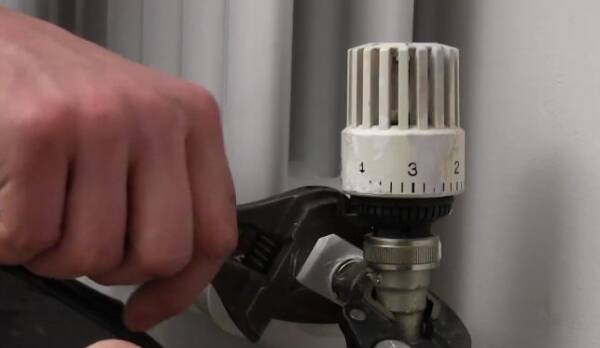
This type of leak will normally occur when the valve is in a ‘mid-open’ position – the leak will normally stop when you fully close the valve.
How to fix a leaking radiator valve
- Drain the system – To repair a leaking rad valve you will first have to drain down the system to below where the leak is occurring.
- Close the valves – Turn off both the supply valve (where the water enters the radiator) and the lockshield valve (the plastic capped valve at the other side of the radiator) – remember to count how many turns it takes to close the lockshield valve.
- Protect the floor – Get your towels and bucket ready to catch any remaining water that may escape from the radiator.
- Loosen the nut – Using an adjustable spanner, undo the union nut (the one between the feeder pipe and the radiator).
- Drain the radiator – Open the bleed valve to allow the rest of the water to leave the radiator and go into the bowl.
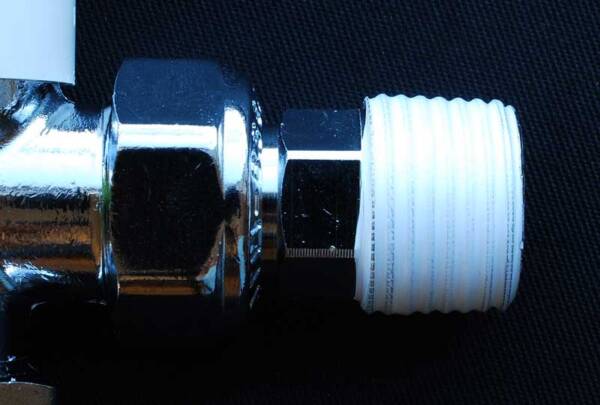
- Tape up – Starting at the male end of the valve tail, wrap carefully with PTFE tape between 10-15 times.
- Open the valves – Re-tighten the union nut and open the bleed and lockshield valves (remembering how many times you turned it before to close it).
- Close the bleed valve – When the water is restored to the system, re-check for any leaks and then close the bleed valve.
Do you need to replace a radiator valve?
Before replacing a radiator valve you’ll have to purchase a replacement: preferably the same type as your existing valve – a different kind may not properly align with the water pipe in the same way.
Once you have a new valve you’ll need to drain all of the water from your central heating system. Unscrew the nuts connecting the water pipe to the valve and then unscrew the valve to replace it.
Clean the threads at the end of the radiator before installing the new valve.
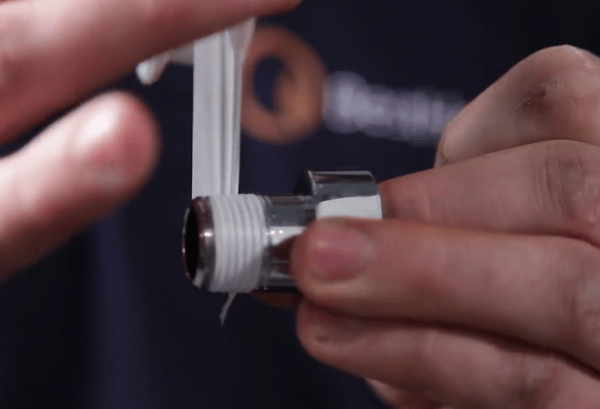
Wrap PTFE tape around the threads of the new adapter (see above) and screw it into the end of the radiator, be sure to not overtighten and damage the fixing.
Slide the valve cap-nut and a new olive over the end of the pipe and connect the new valve.
Once the new valve is in place you’ll need to refill the system and bleed your radiators to remove any air.
Be sure that you carefully check the site of the fitting for any leaks.
Tips on replacing and installing a radiator valve can be found in the video below.
Is your radiator leaking from the spindle?
A radiator with a damaged spindle – that’s part of the connection between the pipework and the radiator – can sometimes be the main cause of a leak and thankfully, it’s easily remedied.
Using a spanner, tighten the gland nut and see if the leak subsides. If this fails, undo the nut and wind some PTFE tape down into the spindle (see below) before tightening back up.
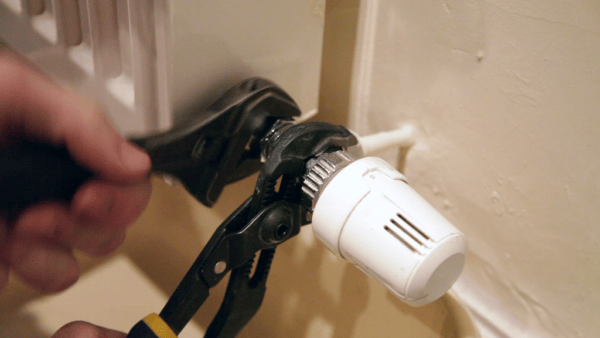
If this still doesn’t stop the leak, you may have to drain down the system and replace the valve –failing that, it’s probably a good idea to call a plumber.
Is the radiator valve or gland the cause of the leak?
Often, a leak at the radiator valve coupling nut can often be fixed by simply retightening the coupling.
If this fails, you’ll need to replace the olive inside the coupling.
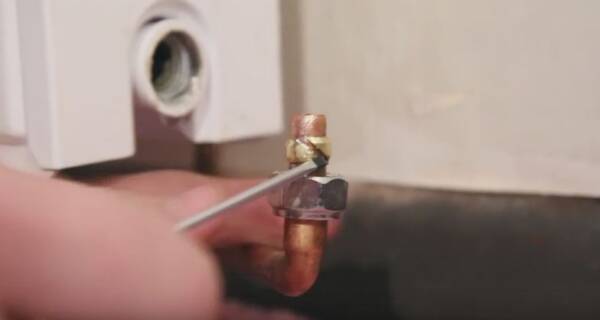
To do this you have to drain the heating system of water and then loosen the nut between the leaking pipe and the radiator.
Remove the nut and the fitting and take the olive off the pipe and replace with a new one – smearing with silicon sealant or winding it with PTFE tape before reconnecting. If this doesn’t work then you will probably have to replace the radiator valve altogether.
How to repair a leaking radiator gland
Sometimes you may find that your radiator is leaking from under the plastic cap of the valve – the gland.
If this is the case, it can be fixed quite easily with PTFE tape.
- Firstly, turn off the valve
- If the water is still coming out of the radiator from under the plastic cap, you will need to turn off the lockshield valve at the other end of the radiator
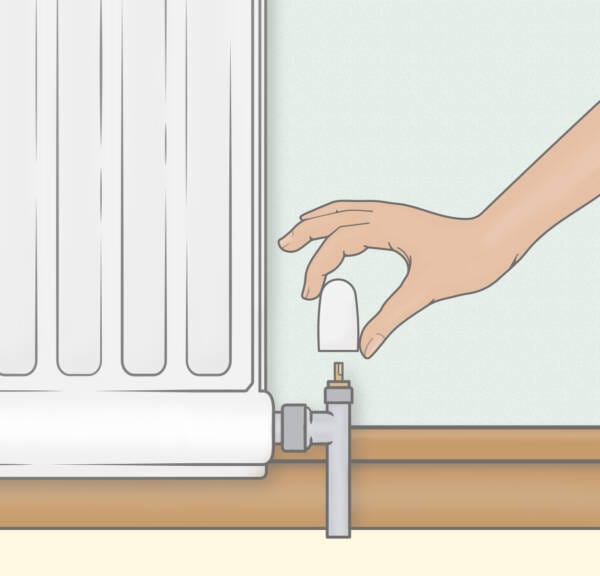
- Remove the plastic cap and gently unscrew the gland nut with an adjustable spanner, taking care to not damage the nut.
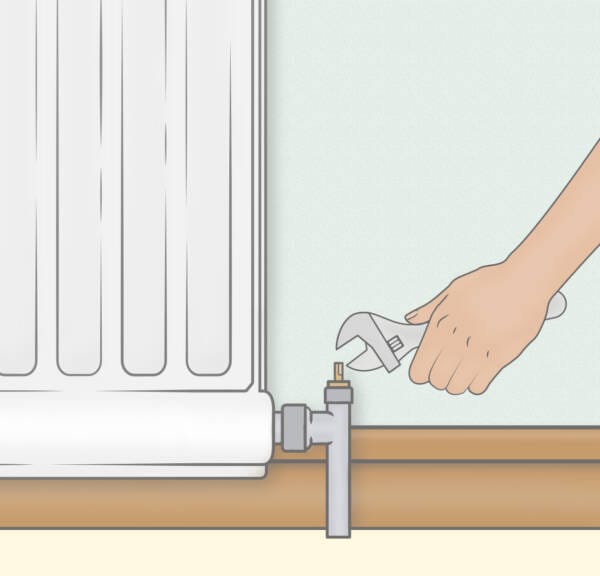
- Stretch a length of PTFE tape (about 20cm long) into a string and wrap it around the spindle of the valve – that’s the little bit sticking up.
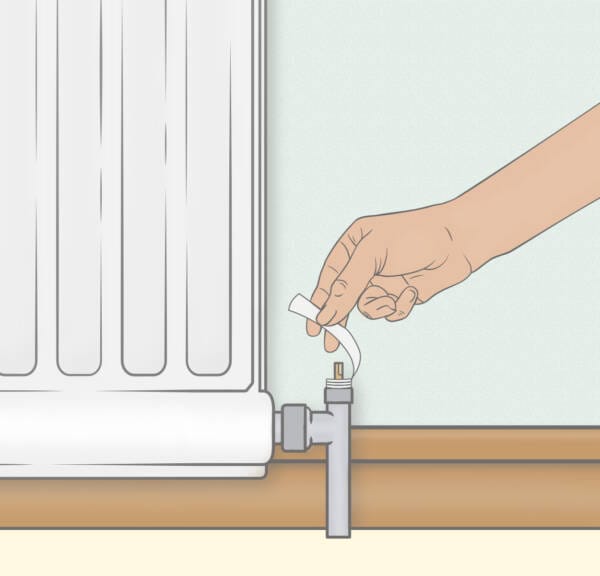
- Using a small flat-headed screwdriver, force the PTFE tape into the body of the valve.
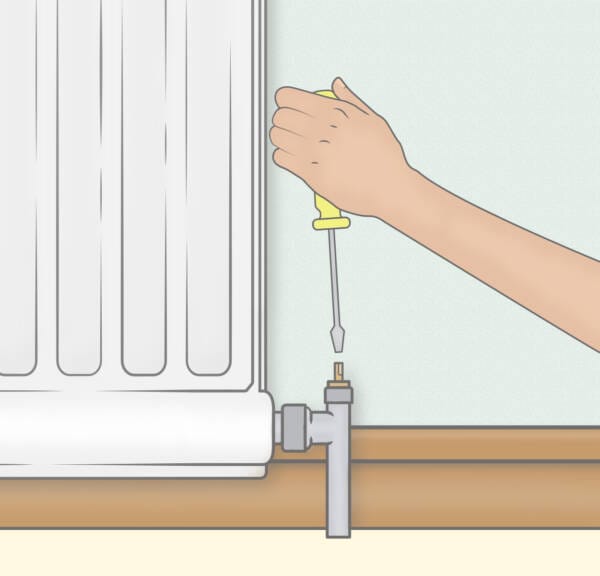
- Apply a little silicone grease to the tape and screw the gland nut back on tightly.
- Finally, replace the plastic cap and turn the valve back on.
Is your radiator leaking because of corrosion?
As with everyone and everything everywhere, stuff gets old – and your radiators are no different.
The main culprit of radiator corrosion is sludge building up inside your rad and effectively causing it to rot from the inside out – this kind of radiator leak is more commonly known as a pinhole leak.
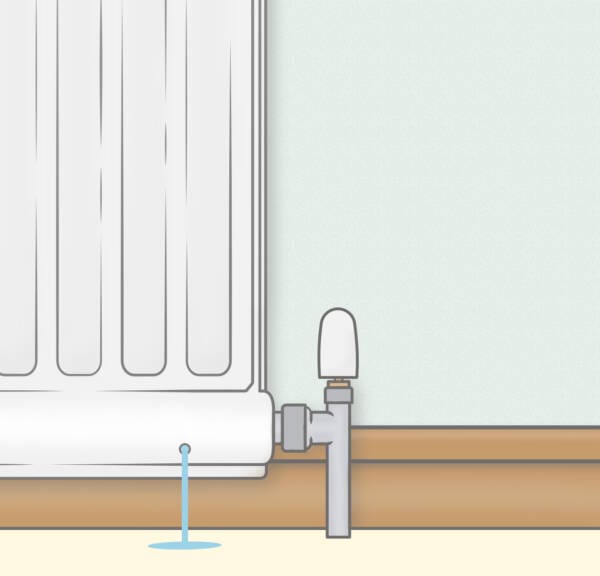
Sadly there isn’t really any hope of ‘fixing’ a leak caused by corrosion, but there is a temporary measure you can take.
If you have a feed and expansion tank – two water tanks in your loft that maintain the level of water in your system – adding a plastic resin sealant will stem the flow until you can purchase a replacement radiator.
Note – You must NOT use this type of sealant in a sealed central heating system!
If your radiator is corroding and a leak occurs, regardless of any temporary measures you take, you will have to get a new radiator: thankfully, we stock a few.
When you have replaced your leaky old radiator with a shiny new one, be sure to add a rust and corrosion inhibitor to the water; this will ensure that the problem doesn’t pay you another visit a few years down the line.
How to repair a leaking pipe joint
In a modern central heating system compression valves are normally used to join the pipes to the radiators.
If one of these joins springs a leak, it is possible to perform a quick fix by tightening the valve with a spanner.
However, if this doesn’t solve the problem and the leak persists, you can perform the following bit of maintenance –
- Drain down the system to below the source of the leak.
- Take a spanner and undo the nut at the joint of the leaking pipe and pull the pipe free.
- Where the face of the olive meets the joint, wrap a couple of turns of PTFE tape around and then re-tighten the nut.
Preventative measures to stop leaking radiators
To reduce the risk of radiator leaks in the first place, and ensure your device operates efficiently, regular preventative maintenance measures can be undertaken. Listed below are some effective tips to keep your radiator in top condition:
1. Frequent inspections
- Visual checks: Inspect your radiator(s) periodically for any signs of rust, corrosion, or moisture surrounding joints and valves. Early detection can curtail larger issues before they properly begin.
- Listen for noises: Don’t ignore any unusual sounds from your radiators, such as hissing or gurgling, which could indicate trapped air or other problems.
2. Bleed a Radiator
- Trapped air: Air can accumulate in radiators, resulting in inefficient heating and enhanced pressure levels. Bleed your radiators with a bleed key at least annually, especially before peak heating season truly arrives.
3. Regularly clean radiators
- Dust and debris: Dust the exterior of your radiators frequently and remove any debris from the fins or grilles, essentially cleaning inside the radiator where possible. This will aid in improving heat transfer and efficiency.
- Deep cleaning: Where possible, utilise a vacuum cleaner with a brush attachment to clean between the radiator fins.
4. Check connections and valves
- Tighten connections: Make sure that all connections and valves are secured tightly, but not over-tightened, as to prevent damage.
- Inspect seals: Be on the lookout for worn-out seals, and promptly replace any you might notice for the prevention of leaks.
5. Maintain Proper Pressure
- Monitor boiler pressure: Make continual checks on your boiler’s pressure gauge. By maintaining the correct boiler pressure, unnecessary stress is alleviated from your radiator system.
- Top up water levels: If your boiler has low pressure, top up the water levels in accordance with the boiler instructions.
6. Consider anti-freeze in low temperatures
- In locations with a freezing climate, it is worth considering the use of anti-freeze in your heating system. This will stop water from freezing in especially low temperatures and causing cracks or radiator leaks.
7. Schedule professional maintenance
- Enlist the assistance of a qualified technician to inspect your heating system once a year. They can outline potential issues before they become serious problems, and ensure that everything is operating properly and correctly.
By incorporating these preventive maintenance practices into your routine, you can significantly reduce the likelihood of leaks and extend the lifespan of your radiator system. Regular care not only enhances efficiency but also saves you money on repairs and energy bills in the long run.
Is a radiator leak serious?
Radiator leaks can be serious. Particularly when the heating is on and the water is hot! It is important to turn the heating off before attempting to fix a leaking radiator.
Water from a leaking radiator can also seriously damage laminate flooring, causing it to swell and warp. If enough water sinks into the boards it can also dissolve the glue that holds them together and pull them apart.
Even durable hardwood flooring can be in need of repair and show stains if a radiator leak is absorbed by the porous wood. Not ideal considering the expense of buying new wooden flooring or trying to protect precious original boards!
Carpets are also at risk from water damage. It only takes 24 hours for mold and mildew to build up if the carpet is sat in water and can be very difficult to clean.
In addition to potentially creating a home decor nightmare, leaky radiators can also create problems for your boiler. Leaks decrease the pressure in your heating system over time and can cause the boiler to shut down. Check if your boiler pressure if correct with the help of our guide, and find out what to do if your boiler pressure is too low.
And if you don’t fix your leaky radiator?
Regardless of what you do, sometimes it’s best to call in the professionals and get them to do the leak fixing for you.
The last thing you want to do is make a minor problem worse by fiddling with something that you shouldn’t.
For more hints and tips on all things home heating, subscribe to our YouTube channel, like us on Facebook and follow us on Instagram and X.
Good luck with that leaky radiator, stay safe and happy heating!
Frequently Asked Questions
Corrosion can cause radiators to leak water. Especially prevalent levels of corrosion and rust in a device can result in small holes forming on the surface, commonly known as pinhole leaks. Discoloured water discharge will emerge from these holes to result in a radiator leaking water.
Leaking radiators should be tended to as quickly as possible to curtail any slip hazards, and prevent damage to nearby furniture and flooring.
Find out what measures you can take to combat a radiator leaking water in our blog, How To Fix A Leaky Radiator.
The easiest and quickest way to find out where a radiator is leaking water from is to dry down the surface of the device using a towel.
Once the appliance is dry, it will be simple to work out where the radiator is leaking water from; one of three locations. Water leaks will emerge either from the body of the radiator, the pipe that fills it with hot water, or the radiator valve or rad tails.
For a greater insight, explore our dedicated blog, How To Fix A Leaky Radiator.
Corrosion can eventually lead to radiators leaking water, as sludge collects within the device to form holes on their surface, and cause them to rot from the inside out. Such blemishes are commonly known as pinhole leaks.
There are a few means to tend to a radiator leaking water as a result of corrosion, some with a more lasting effect than others. Our blog, How To Fix A Leaky Radiator, details the measures you can take.
A build up of rust can eventually cause radiators leaking water, as sludge can collect within the appliance to cause rotting from the inside out, and small holes to form on the radiator surface. This type of leak is regularly referred to as a pinhole leak.
There are a number of measures you can implement to stop a radiator leaking water if rust does have a negative effect, some representing a more permanent solution than others. Our blog, How To Fix A Leaky Radiator, explains how you can combat the problem in greater detail.
Typically, a radiator leaking water results from the process of rusting or corrosion within the radiator leading to tiny holes forming on its surface. In the early stages, only a small level of discoloured water will drip from the rad, so it is not usually an emergency from the outset.
That said, you should tend to a radiator leaking water as quickly as possible to prevent the situation escalating and stop any further issues. For more detailed help and advice in dealing with a radiator leaking water, explore our blog on How To Fix A Leaky Radiator.
With regards to leaky radiators, a leaking radiator valve is typically the easiest type to fix.
Usually, leaking valves will occur as spindle packing within the valve starts to become damaged or worn out.
These sort of leaks tend to happen when the radiator valve is in a ‘mid-open’ position, and can most often be curtailed via the full closure of the valve.
To find out more about repairing leaky radiators, take a look at our dedicated blog, How To Fix A Leaky Radiator.
Usually, the early stages of a radiator leak will only see a small amount of discoloured water drip from the radiator. This comes as a result from significant corrosion or rusting inside the radiator creating tiny holes.
As the unwanted holes are typically miniscule to begin with, a leaking radiator doesn’t immediately constitute an emergency situation.
However, you should address the problem of a leaking radiator as early as possible in order to prevent the possibility of further issues. Check out our extensive leaky radiator guide for more expert advice.
Yes. You should address the issue of a leaking radiator as quickly as possible so it doesn’t become a bigger problem.
If left unattended, a leaking radiator could cause damage to the flooring and furniture within your home, as well as posing a slip hazard.
As such, a leaking radiator should be repaired as soon as possible. Discover how to fix a radiator leak with our ultimate radiator leaking guide.

John Lawless is SEO Manager at BestHeating and a recognised expert in home heating. With over a decade of experience in the industry, he blends technical insight with practical advice on everything from energy efficiency to radiator design, and more. John’s work has featured in national media and leading home & garden publications, and he leads the editorial strategy for the BestHeating Advice Centre – helping homeowners make smarter heating choices with confidence.