Contents
ToggleWhat we'll cover...
In this guide, we’ll explain exactly how a combi boiler can work alongside underfloor heating, including what’s involved in installation, and whether your existing boiler is suitable.
We’ll discuss the pros and cons of running UFH from a combi, typical costs, and how to combine both radiators and underfloor heating in a single system. We’ll also explore whether it’s worth the investment for your home, including examples and expert-led advice along the way.
Does underfloor heating work with a combi boiler?
Yes, it does. A modern combi boiler can power wet underfloor heating systems equally as effectively as it runs radiators, making it a highly efficient and space-saving option for many UK homes. The key is to ensure your boiler is correctly sized, your system is properly zoned, and your installation is handled by a qualified professional.
How does a combi boiler work with underfloor heating?
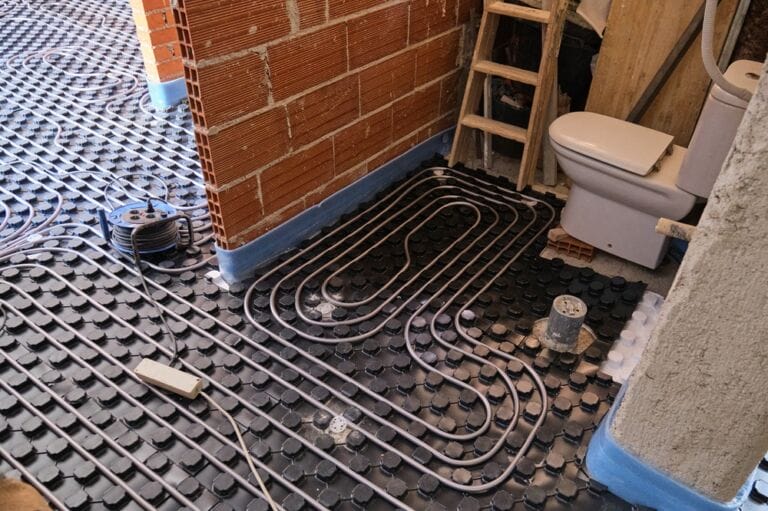
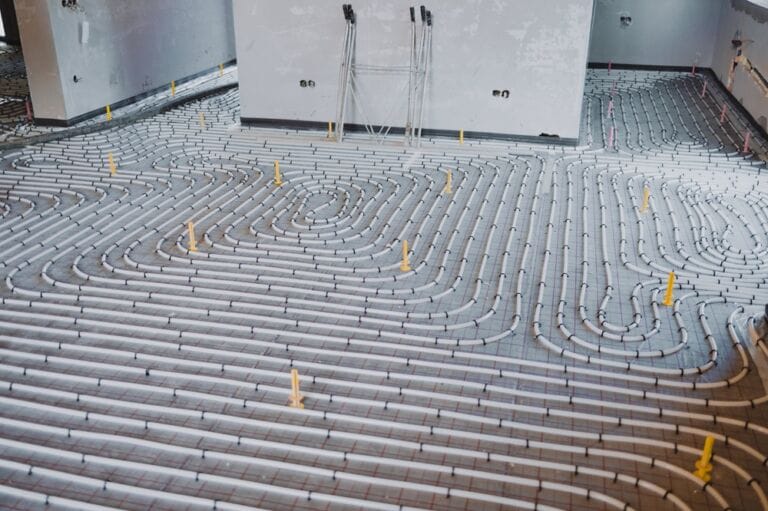
A combi boiler underfloor heating system works by circulating warm water through a network of pipes installed beneath the floor. These pipes distribute heat evenly throughout the room, creating a comfortable radiant warmth at a lower flow temperature (typically 35-55°C) in comparison with radiators (65-75°C).
- Wet underfloor heating (UFH): Takes and uses water from the combi boiler. This is the type of underfloor heating system that is compatible with combis.
- Electric underfloor heating: Electric underfloor heating uses electric mats or wires which are powered by mains electricity. This type of system does not connect to your boiler and is therefore not suitable for a combi setup.
According to the Energy Saving Trust, underfloor heating systems can operate at much lower temperatures than traditional radiators, which makes them somewhere between 15 to 40% more efficient when correctly installed in a well-insulated property.
Can you use your existing combi boiler?
In most cases, it is possible to use your existing combi boiler alongside a wet underfloor heating system. That is, provided it’s relatively modern, efficient, and powerful enough to meet your home’s total heating and hot water demand.
- Smaller homes (1-2 bedrooms, 1 bathroom, up to 10 radiators): A 24-27kW combi boiler is often suitable.
- Medium homes (3 bedrooms, 1-2 bathrooms, up to 15 radiators): A 28-35kW combi will usually work well.
- Larger homes (4+ bedrooms, 2-3 bathrooms, 15-20 radiators): A 35-42kW combi boiler might be required, although a system boiler with a hot water cylinder can sometimes prove more efficient.
All in all, the real test is whether your combi can handle peak demand. For instance, the running of underfloor heating and a hot shower at the same time. A Gas Safe engineer can calculate these requirements for your home.
Underfloor heating installation and costs
Installation:
Adding underfloor heating to a combi boiler system is a more involved process than simply plugging in pipework. Here’s a breakdown of what to expect:
- Pipework installation: UFH pipes are laid in a screed or a dry panel system underneath the floor.
- Manifold: This works as a distribution hub for the underfloor circuits.
- Mixing valve & pump: Decreases the higher flow temperature from the boiler down to the lower levels needed for effective underfloor heating.
- Zoning controls: Smart thermostats or zoned heating systems allow UFH and radiators to operate independently of each other.
Screwfix suggests a wet underfloor heating installation will take an absolute minimum of two days to complete, with factors like room size affecting how long the work will take.
Costs:
- Single room retrofit: This all depends on the size of the room. Checkatrade estimates an outlay between £95 and £110 per square metre for retrofitting, so a standard-sized family living room, ranging between 15 and 30 metres squared, would set you back anywhere between £1400 and £3300.
- Whole-house installation: Several factors are at play here, including property size, flooring type, geographical location, and whether a new-build or retrofit is the subject. Working off a retrofit with a 50m² ground-floor layout, BuildPartner estimates an average cost of £15,878, or £308 per square metre. The cost depreciates greatly for new-build installations, with a suggested average price of £5,459, or £106 per square metre.
- Running costs: According to WUNDA, underfloor heating can be up to 25% cheaper to run when paired with a combi boiler, equating to around £140 per year.
Pros and cons of using a combi boiler for underfloor heating
Pros | Cons |
Efficient: Lower water temperature = less energy consumed | May require a higher-output combi in larger homes |
Space-saving: No hot water cylinder needed | Retrofitting can be disruptive and costly |
Comfortable, even heat: Eliminates cold spots | Flow rate may struggle with multiple bathrooms |
Aesthetics: No radiators cluttering walls | Higher upfront installation costs |
Zoning options: Independent control of UFH and radiators | Not ideal for homes with very high hot water demand |
Can you run radiators and underfloor heating together with a combi boiler?
Yes, and a combination of radiators and underfloor heating is a very popular setup. Many homeowners opt for:
- Underfloor heating downstairs for open-plan kitchens and living spaces
- Radiators upstairs (or heated towel rails) in bedrooms and bathrooms
This is achieved through zoned heating, where underfloor heating and radiators each work from their own thermostats and operate on separate circuits.
Example:
- Zone 1: UFH, operating at 40°C flow temperature.
- Zone 2: Radiators, operating at 70°C flow temperature.
A manifold and mixing valve will manage these different temperatures, ensuring both systems run effectively and efficiently without interfering with each other.
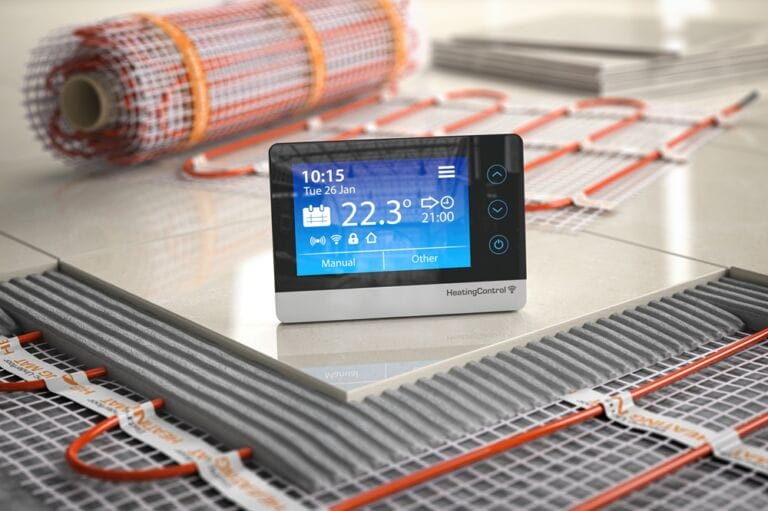
Is underfloor heating with a combi boiler worth it?
Underfloor heating is often viewed as a luxury, but on a deeper level, it’s also a practical long-term investment:
- Comfort: Even heat distribution allows rooms to feel warmer at lower air temperatures.
- Energy savings: Lower water temperatures reduce fuel use, especially when used in cohesion with condensing combis.
- Futureproofing: UFH is perfect to pair with renewable heating systems, such as heat pumps, if you upgrade later.
- Aesthetics & space: Radiator-free walls allow extra freedom with interior design.
Is underfloor heating with a combi boiler worth it?
Homebuilding & Renovating suggests that around 80% of new-build homes now incorporate some form of underfloor heating, demonstrating its growing popularity in the UK. If your home and boiler are suitable, underfloor heating is a great option, especially in new builds, where no disruption is required to existing flooring or pipework.
For smaller to medium-sized homes, a combi boiler can power both an underfloor heating system and radiators effectively, provided the system is designed correctly. Larger households might require a higher-capacity boiler or consider a system boiler for further hot water security.
If you’re considering teaming underfloor heating with your combi boiler, speak to one of our experts first. It’s the best way to ensure your system is properly sized, installed, and zoned for long-term efficiency and the best performance possible.
And let us know about your underfloor heating installations and upgrades in the comments below, or by reaching out to us on Instagram, Facebook or X.

John is a Research Specialist for the Best Heating Advice Centre, where for over nine years he has dedicated himself to demystifying home heating for our customers. He specialises in creating clear, data-driven guides and how-to articles by collaborating directly with our team of certified heating experts and product engineers.
His work, built on a foundation of journalistic research, has helped millions of readers make confident and informed decisions about their home heating. When he’s not breaking down the heat output differentials from radiators to heated towel rails, John fancies himself as a fine football and music connoisseur.