Contents
ToggleWhat we'll cover...
Choosing between a combi boiler and a conventional boiler might feel like a big decision – and it should. Your boiler isn’t just a box in the cupboard; it’s the beating heart of your home heating system, responsible for your hot water supply, and keeping everyone in the house comfortably warm.
In this guide, we’ll break down the key differences between combi and conventional boilers, covering how they work, how much they cost, and which setup suits different property types and lifestyles. You’ll learn about the performance capabilities of each type in terms of efficiency, space requirements, water pressure, installation, and long-term running costs – all gleaned from expert insights and real-world data.
By the end, you’ll know exactly which boiler is the right choice for your home – whether you live in a one-bed flat, a sprawling family home, or a property sized somewhere in between.
Understanding the boiler basics
According to the Energy Saving Trust, heating makes up more than 60% of a typical UK household’s energy use, so selecting the correct boiler can have a major impact on your bills, comfort, and carbon footprint.
While combi boilers have become the go-to option for most modern homes, conventional boilers remain important, especially in properties with multiple bathrooms, weaker mains water pressure, or legacy heating systems.
This guide will offer a comparison of both options across all key metrics – so you can reach a confident, informed decision when it’s time to replace or upgrade your boiler.
What is a combi boiler?
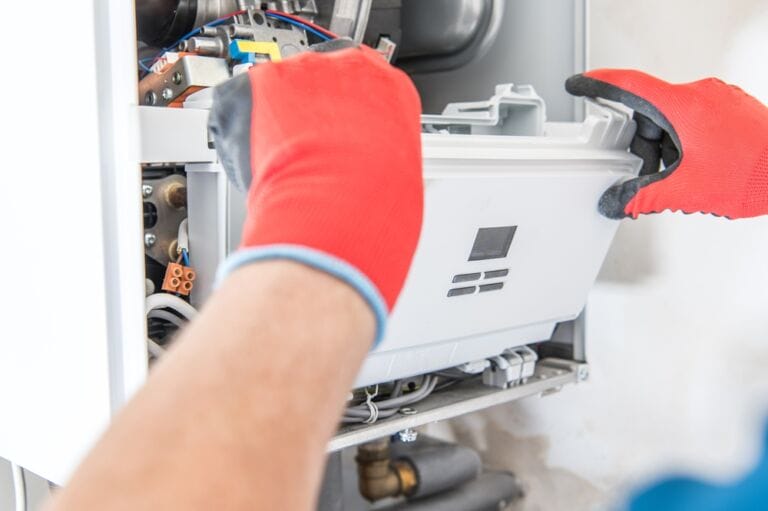
A combi boiler (short for “combination boiler”) is a single compact unit that delivers both central heating and hot water on demand – without the need for a hot water cylinder or cold-water storage tank.
In turn, it acts as a space-saving powerhouse, ideal for modern homes where storage space is at a premium.
How it works
- Cold water enters the system directly from the mains.
- The heat exchanger inside the boiler warms up the water as it passes through.
- Hot water is transported instantly to your taps, shower, or heating system.
Combi boiler quick facts
Feature | Detail |
Hot water supply | On-demand, no storage |
Efficiency | 90-94% (ErP A-rated) |
Installation cost | £1,800-£3,000 (Checkatrade, 2024) |
Best for | Flats, small to medium homes |
Space required | Minimal – wall-mounted unit only |
Water pressure | Mains-fed, typically strong |
Jess Steele, heating trends analyst for BestHeating: “Combi boilers dominate the UK market – roughly 70% of all new installations – because they deliver instant hot water and take up so little space.”
What is a conventional boiler?
A conventional boiler, also known as a regular or heat-only boiler, operates in a different manner. It heats up water and stores it in a separate hot water cylinder, typically located in an airing cupboard, and is often paired up with a cold-water storage tank in the loft.
This setup is commonplace for older or larger homes with multiple bathrooms, where high hot water demand can overwhelm smaller, on-demand systems like combi boilers.
How it works
- Cold water from the loft tank flows into the boiler.
- The boiler heats up the water and pumps it into the hot water cylinder for storage.
- Hot water is drawn out from the cylinder when taps or showers are switched on.
The stored supply allows multiple taps or showers to run simultaneously without loss of pressure.
Conventional boiler quick facts
Feature | Detail |
Hot water supply | Stored in hot water cylinder |
Efficiency | 80-90% (ErP B-C-rated) |
Installation cost | £2,500-£4,000 (Energy Saving Trust, 2024) |
Best for | Large homes with multiple bathrooms |
Space required | Cylinder + loft tank + boiler |
Water pressure | Gravity-fed (lower than mains) |
Paul Cavanagh, product procurement specialist at BestHeating explains: “Conventional boilers are still a brilliant choice for large households or period properties with existing tanks. They can deal with high water demand effortlessly.”

Combi and conventional boilers: At a glance
Here’s how the two main types compare side-by-side.
Feature | Combi Boiler | Conventional Boiler |
Hot Water Supply | On demand | Stored in cylinder |
Water Pressure | Mains-fed (strong) | Gravity-fed (weaker) |
Space Required | Compact single unit | Boiler + cylinder + cold tank |
Installation Complexity | Simple | More complex (extra pipework) |
Energy Efficiency | 90-94% (A-rated) | 80-90% (B-C-rated) |
Ideal Property Type | Flats / small houses | Large family homes |
Multi-Bathroom Use | Limited | Excellent |
Maintenance | Minimal | More system components to maintain |
Sources: Boiler Guide, Energy Saving Trust
Combi vs conventional boilers: Pros and cons
Combi boilers pros and cons
Pros | Cons |
Space-saving, single-unit design | Not ideal for homes with multiple bathrooms |
Hot water on demand | Dependent on strong mains pressure |
Highly efficient and economical | Loses water pressure if two showers run at once |
Simple installation | No backup immersion heater |
Lower maintenance costs | Conversion from a conventional system can be costly |
John Lawless, digital content lead for BestHeating: “If you’re upgrading a small home with one or two bathrooms, a combi boiler is usually the most cost-effective option in both installation and running costs.”
Conventional boiler pros and cons
Pros | Cons |
Can supply multiple taps/showers simultaneously | Requires space for tanks and cylinders |
Works well with older, gravity-fed systems | Hot water is limited to cylinder capacity |
Compatible with low mains pressure | Takes time to reheat water after cylinder empties |
Reliable and consistent flow | Less efficient due to heat losses |
Optional immersion heater for backup | More complex installation and plumbing |
Boiler installation and running costs
Installation and running costs
The cost to install a boiler will vary depending on your existing setup, pipework network, and whether you’re replacing like-for-like or switching between different types of systems.
Boiler Type | Average Installation Cost | Includes |
Combi Boiler | £1,000-£2,000 | Single wall-mounted unit |
Conventional Boiler | £2,500-£3,000 | Boiler + cylinder + cold tank |
Conversion (Conventional → Combi) | £2,500-£4,000 | Boiler + system upgrade |
Source: Checkatrade
Rikki Fothergill, bathroom heating guru: “If you’re already on a conventional setup, switching to a combi can free up an entire airing cupboard and loft tank – but expect slightly higher installation costs upfront.”
Running costs and efficiency
Boiler Type | Efficiency Rating | Annual Gas Use (3-bed home) | Estimated Annual Cost (Ofgem 2024) |
Combi Boiler | 90-94% | 12,000 kWh | £840/year |
Conventional Boiler | 80-90% | 14,000 kWh | £980/year |
Source: Ofgem
Hot water demand and usage patterns
A major difference between combi and conventional boiler systems is how they deal with simultaneous demand.
- Combi boilers heat water directly from the mains, so their pressure can drop if multiple outlets are in operation at once.
- Conventional boilers draw from stored water, maintaining a steady supply across multiple bathrooms – though they must reheat when the tank has emptied.
Scenario | Combi Boiler | Conventional Boiler |
1 shower running | ✅ Instant hot water | ✅ Instant hot water |
2 showers running | ⚠️ Possible pressure drop | ✅ No problem |
3+ taps or baths | ❌ Struggles to maintain flow | ✅ Maintains steady flow |
Hot water ready after tank empties | ✅ Instant | ❌ Wait for reheating |
If your household uses more than 200 litres of hot water a day, a conventional setup is likely to serve you better in terms of balance between performance and running costs.
Efficiency and eco performance
Energy efficiency plays a vital role in long-term savings and environmental impact.
Modern condensing combi boilers recover heat from exhaust gases that older models lose, making them a far more efficient option overall.
Efficiency Factor | Combi Boiler | Conventional Boiler |
ErP Efficiency Rating | 90-94% (A-rated) | 80-89% (B/C-rated) |
Heat Recovery | Yes (via condensing technology) | Often limited or absent |
CO₂ Emissions (kgCO₂/kWh) | 0.18 | 0.20 |
Energy Saving (vs old boiler) | £350/year potential | £200-£250/year potential |
Hot Water Heat Loss | Minimal | Higher (from stored cylinder) |
Source: Heatable
Lifespan and maintenance
Boiler Type | Typical Lifespan | Servicing Requirements |
Combi Boiler | 10-15 years | Annual service recommended |
Conventional Boiler | 12-20 years | Annual service + tank maintenance |
Which boiler is best for your home?
Every home has its quirks, so there isn’t a definitive answer.
Below is an overview of how each boiler type performs in various common household scenarios.
Small homes or flats (1 bathroom)
Best choice: Combi boiler
- Space-efficient, with no need for tanks or cylinders.
- Provides instant hot water for daily use.
- Ideal for homes with one shower or limited pipework.
- Lower running and maintenance costs.
Large homes (2+ bathrooms)
Best choice: Conventional boiler
- Can serve multiple outlets simultaneously.
- Maintains steady temperature and flow.
- Compatible with solar water heating systems.
- Works well in properties with existing tanks and legacy systems.
Homes with weak water pressure
Best choice: Conventional boiler (gravity-fed)
- Doesn’t rely on mains pressure.
- Consistent performance in rural or older properties.
- Can use a pump for extra boost.
Limited budget or space restraints
Best choice: Combi boiler
- Lower installation and component costs.
- Takes up minimal space – perfect for modern apartments.
- Ideal for retrofitting into smaller homes or replacing old boilers.
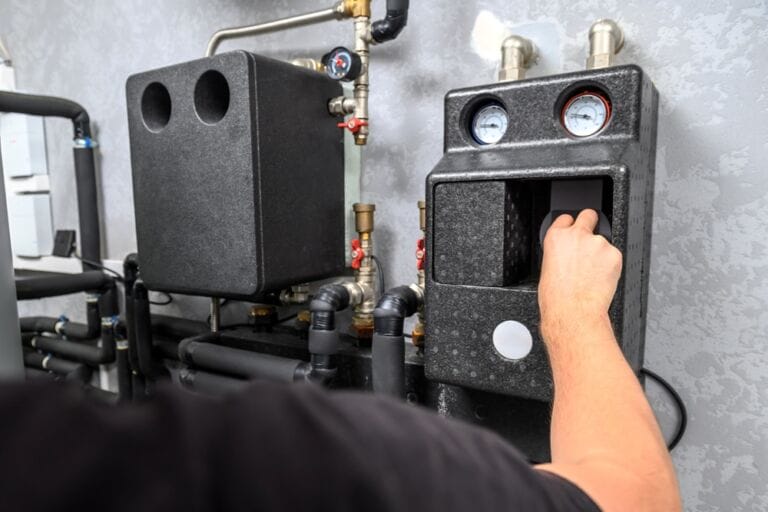
Boiler conversion considerations: Switching systems
If you have a conventional boiler currently installed, you can switch to a combi model – but be aware of the extra work involved.
Typical conversion steps include:
- Removing the hot water cylinder and loft tanks.
- Installing new pipework to connect directly to mains.
- Upgrading to thermostatic radiator valves (TRVs).
- Fitting new flue or condensate pipe if required.
Cost estimate: £3,000-£4,500, depending on property size (Checkatrade, 2025).
Combi vs conventional boilers summary table
Category | Combi Boiler | Conventional Boiler |
Hot Water Supply | Instant | Stored (limited capacity) |
Space Requirement | Compact, single unit | Requires cylinder and loft tank |
Efficiency | 90-94% | 80-89% |
Installation Cost | £1,800-£3,000 | £2,500-£4,000 |
Running Cost (3-bed) | £840/year | £980/year |
Maintenance | Simple | Moderate |
Ideal For | Flats, small-medium homes | Large, multi-bathroom homes |
Water Pressure | Mains-fed | Gravity-fed |
Eco-Friendliness | Higher | Moderate |
Conversion Cost | N/A | £3,000-£4,500 |
Backup Option | None | Immersion heater possible |
Upgrade your home heating system with BestHeating
No matter if you’re modernising an urban city flat or future-proofing a large family home, choosing the right boiler will transform your heating efficiency and comfort levels.
- Choose a combi boiler for simplicity, instant hot water, and energy savings in smaller homes.
- Stick with (or upgrade to) a conventional system if your house features multiple bathrooms or low mains pressure.
There’s plenty more useful resources covering all sorts of heating topics in the BestHeating Advice Centre. And don’t forget to let us know how you commence with your heating upgrades in the comments below, or by reaching out to us on Instagram, Facebook or X.
Frequently Asked Questions
Do combi boilers need a water tank?
No. Combi boilers heat water directly from the mains supply, removing the need for hot water cylinders or loft tanks.
Are combi boilers cheaper to run?
Yes. With higher efficiency levels and on-demand heating, combi boilers utilise less energy and provide lower running costs for smaller homes.
Can a combi boiler run two showers at once?
Not typically. Combi boilers are a better option for single-bathroom homes; pressure can drop with simultaneous use of multiple outlets.
Are conventional boilers being phased out?
No, but the UK is shifting toward low-carbon heating solutions heading into the future. Condensing boilers remain fully supported.
When should I not get a combi boiler?
If your home has a weak mains pressure supply or multiple bathrooms, a conventional system may be the better solution to opt for.

John is a Research Specialist for the Best Heating Advice Centre, where for over nine years he has dedicated himself to demystifying home heating for our customers. He specialises in creating clear, data-driven guides and how-to articles by collaborating directly with our team of certified heating experts and product engineers.
His work, built on a foundation of journalistic research, has helped millions of readers make confident and informed decisions about their home heating. When he’s not breaking down the heat output differentials from radiators to heated towel rails, John fancies himself as a fine football and music connoisseur.