


Every room deserves the finishing touch. Discover radiators that look as good as they perform, helping you create a space that feels truly complete.
Shop by radiator type
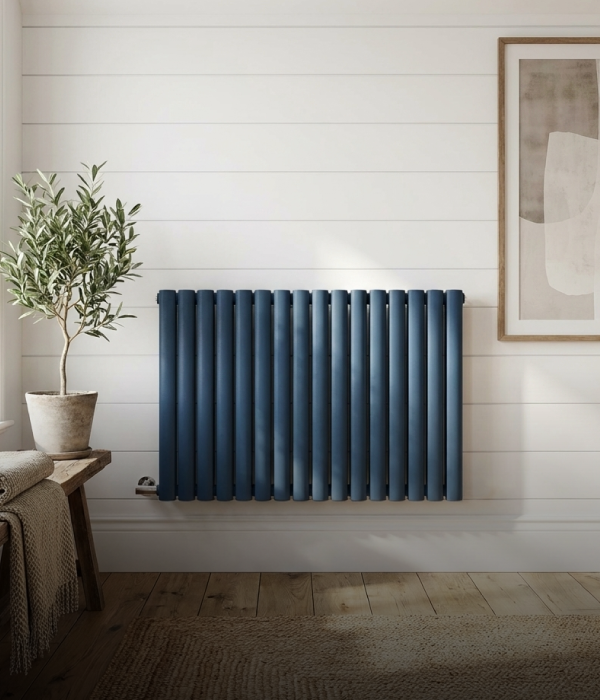
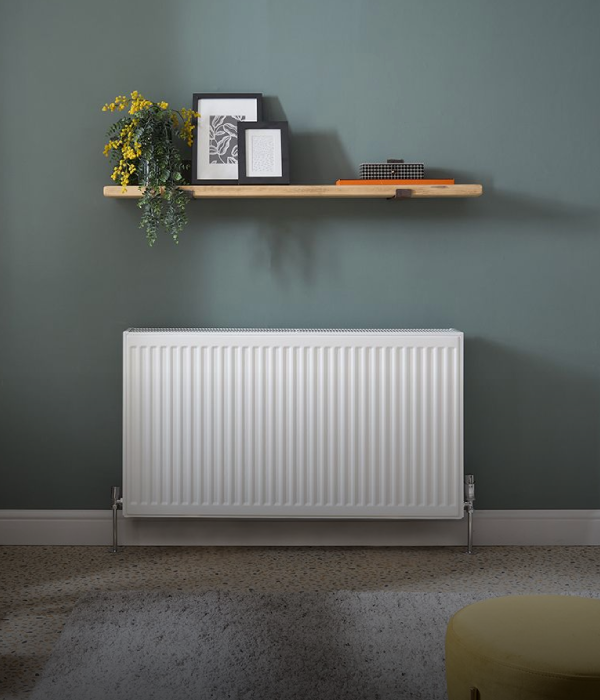
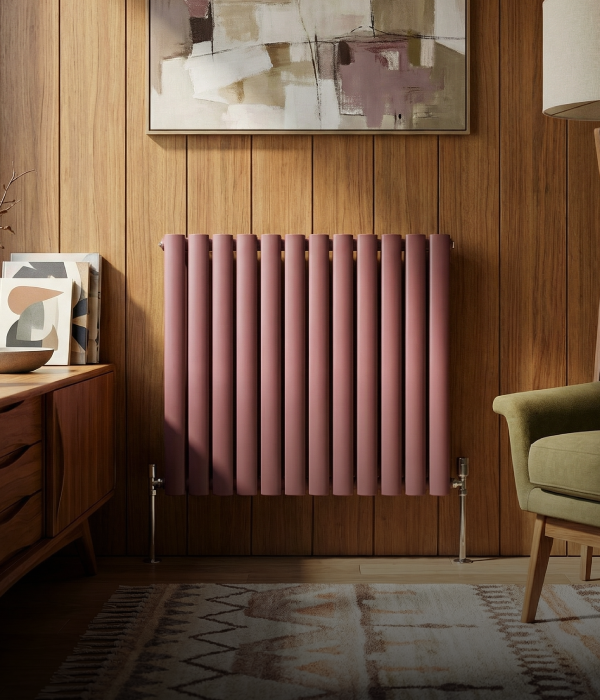
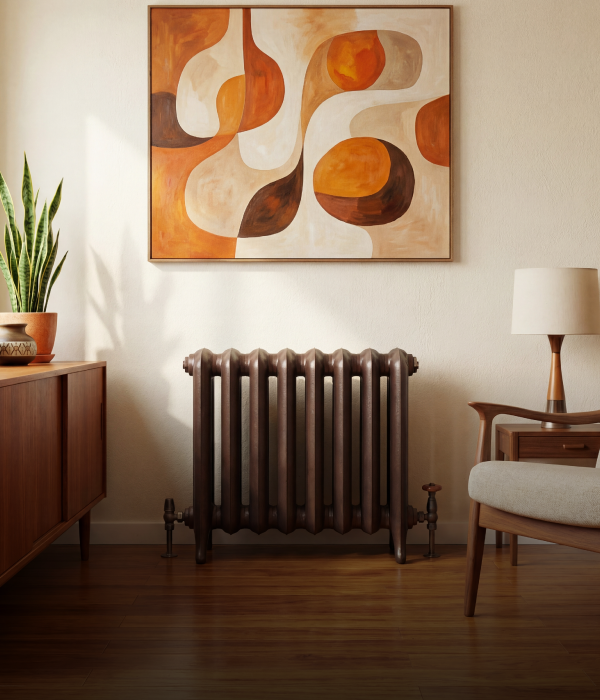



Shop by room
Find the right fit for every space
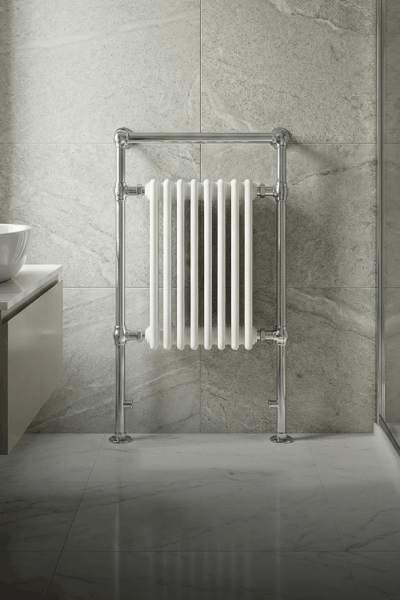
Bathroom
radiators
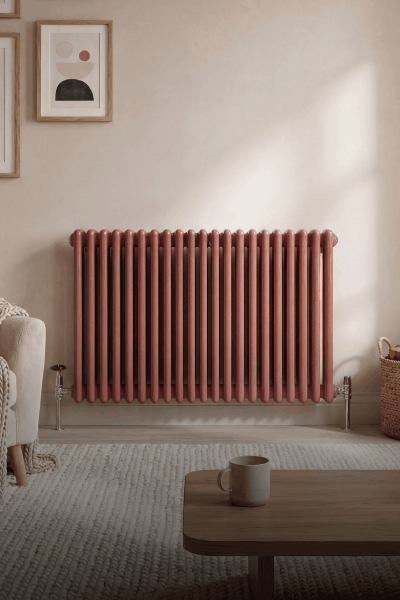
Living room
radiators
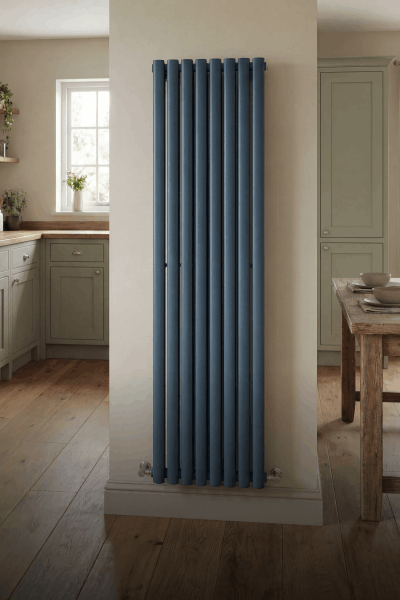
Kitchen
radiators
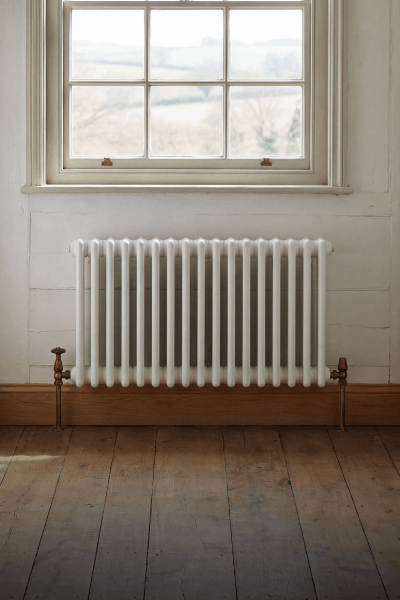
Small room
radiators
Shop our bestselling radiators
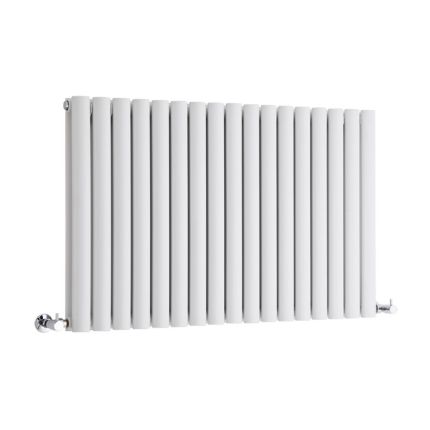
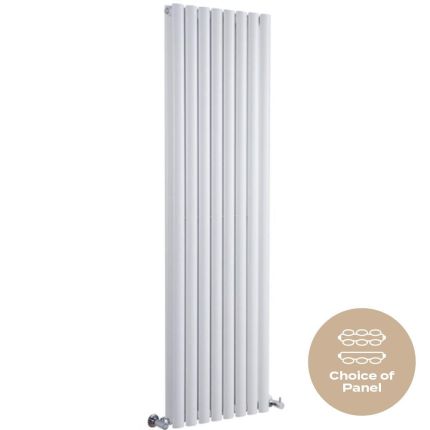
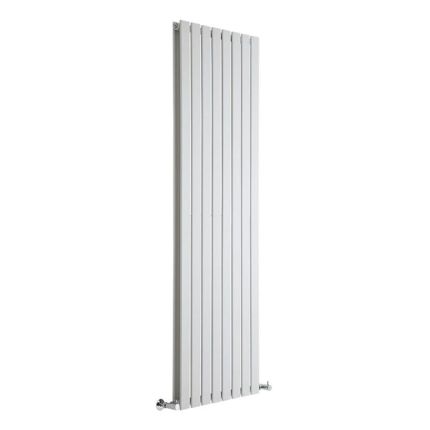
-
 up to 20%
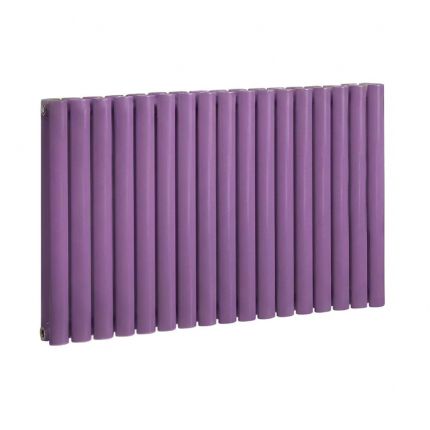
Revamp any room in your home and introduce stunning colour
@callmecobbly
Why so many rooms start with BestHeating

Carefully tested for enduring quality

Backed by guarantees of up to 20 years

Delivered free across the UK

Supported by our friendly team of heating experts

Rated Excellent by thousands of happy homes
Helpful answers to common radiator questions
How do I know what size radiator I need?
The right radiator size depends on several factors, including your room dimensions, ceiling height and the number of windows in the space. The easiest way to get an accurate recommendation is to use our BTU calculator. Simply enter your room measurements and we’ll work out the heat output required for comfortable, everyday warmth.
Which radiator finish is most popular?
Anthracite remains one of the most popular radiator finishes, thanks to its sophisticated dark grey tone and contemporary appeal. White continues to be a trusted choice too, offering a timeless look that works in almost any space.
Do radiators come with guarantees?
Yes. Every radiator is designed for lasting performance, and comes with extended guarantees of 10 to 20 years at no extra cost. It’s extra peace of mind that the radiator you choose today will continue to look and perform beautifully for years to come.
How quickly can my radiator be delivered?
Next working day delivery is available on orders placed and paid for by 4pm, Monday to Friday. You can also choose from pre-10:30am, pre-noon, named-day and Saturday delivery options. For most orders, standard delivery takes between one and three working days. Available delivery options will vary depending on the product you’ve chosen, as well as its size, weight, order value and delivery location. These options will be confirmed at checkout.
Can I mix electric and central heating radiators in my home?
Yes. Many homes use a combination of electric and central heating radiators. Central heating radiators are typically used as part of a whole-home heating system connected to a boiler, while electric radiators are often chosen for individual spaces such as extensions, garden rooms or areas that sit outside the main heating system. Both can be installed in the same home, but it’s worth remembering that electric radiators operate independently of your central heating. This flexibility can make it easier to heat different rooms in the way that works best for your home and how you live in it.
Helpful guides, expert advice
A collection of practical guides to help you choose the right radiator for your space with confidence.
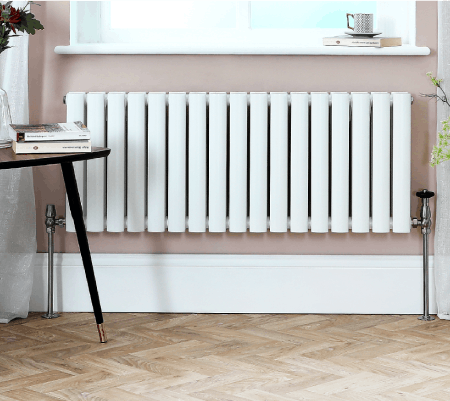
What size radiator do I need?
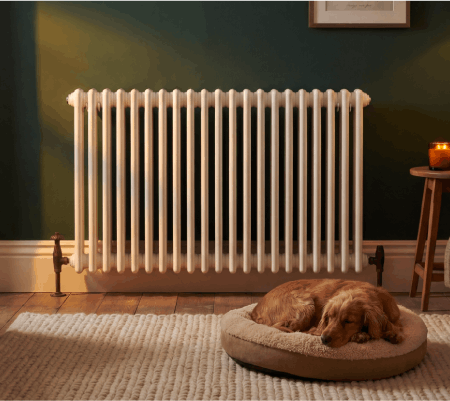
Electric vs central heating radiators - which is best for your home?
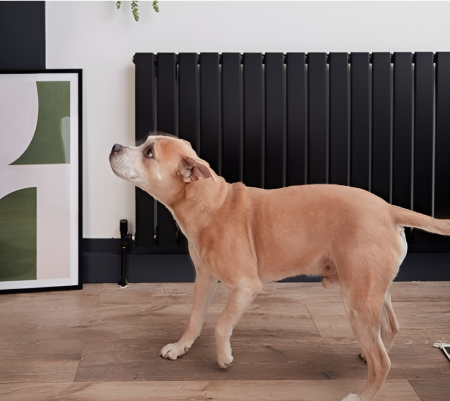
The radiator buyer's guide
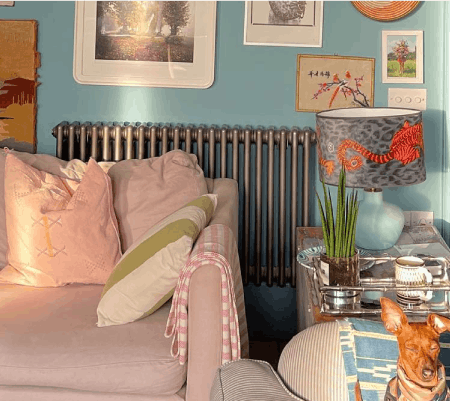
radiator style & inspiration
Not sure on size?
Our BTU calculator helps you choose with confidence. Learn more
Love modern spaces?
Anthracite finishes bring depth, contrast and contemporary style. Learn more
Prefer something timeless?
Column radiators have been a design favourite for generations. Learn more
Don't forget your valves
Choose a finish that brings the whole room together. Learn more
Everything you need to know about choosing a radiator
What size radiator do I need?
Radiator size is measured in BTU - British Thermal Units, the amount of heat a radiator gives out each hour. The bigger and colder the room, the higher the BTU you need.
As a guide, 1,000 BTU is around 293 watts.
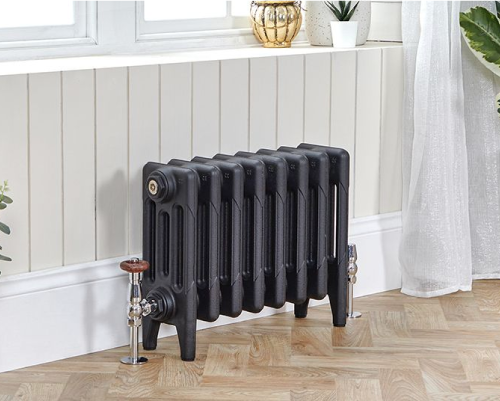
Small rooms
Ensuites and cloakrooms typically need 1,000-3,000 BTU. A compact radiator or a single panel will do the job beautifully.
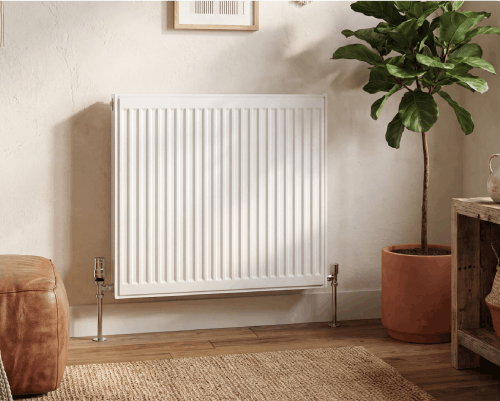
Medium rooms
Bedrooms and home offices usually need 3,000-6,000 BTU. A double panel radiator or a vertical design is often the perfect fit.
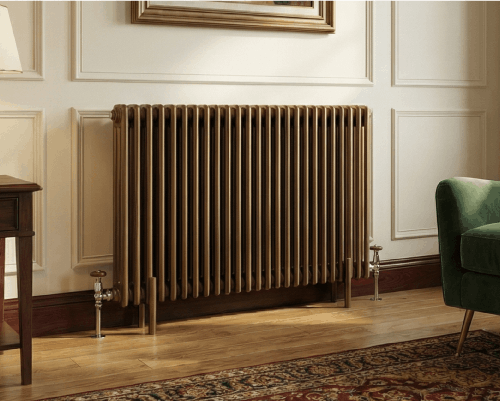
Large rooms
Living spaces with high ceilings or big windows may need 6,000 BTU or more. Consider a triple panel radiator, or pair two radiators together.
Ceiling height, window size and the direction a room faces all impact the size you’ll need. Our BTU calculator does the maths for you in under a minute.
Shape matters as much as size.
The best radiator isn’t always the largest one. Choosing a shape that works with your room layout can help you make better use of the space while still achieving the heat output you need.
Narrow wall, or behind a door? A vertical radiator uses height rather than width, making the most of tall, narrow spaces.
Under a window, or along a long wall? A low-level horizontal radiator sits neatly without crowding the room.
Central heating, electric or dual fuel?
Radiators work with one of three heating systems. The right option depends on how your home is set up and how you prefer to control the heat.
Central heating radiators connect to your existing boiler and circulate hot water through a closed pipe network. This is the most common setup in UK homes and the usual choice for heating a whole house at once.
Electric radiators offer room-by-room heating without pipework or boiler dependency, making them ideal for extensions, garden rooms, conservatories and homes without gas.
Dual fuel radiators connect to your central heating but also take an electric element, so you can run them on their own when the boiler is off. Most often chosen for towel rails and bathrooms.
Not sure which fits? Most homes rely on central heating throughout, with electric radiators added in the rooms that sit outside the main system.
Radiator panel types explained
Panel radiators are the most common type in UK homes. The number of panels and convector fins decides how much heat you get from the same width of wall.
Single panel (Type 11) - one panel with one set of convector fins. Slim and space-efficient, making it well suited to smaller rooms or as a secondary heat source.
Double panel plus (Type 21) - two panels with one set of fins between them. Greater heat output than a Type 11, while keeping a slimmer profile than a Type 22.
Double panel (Type 22) - two panels with two sets of fins. A popular choice for living rooms and bedrooms.
Triple panel (Type 33) - three panels and three sets of fins. The most heat available from the wall space, for large or hard-to-heat rooms.
Beyond panel radiators, you’ll also find designer, column, vertical, horizontal and traditional styles. Each offers something different depending on your space - explore the style tiles above to find your fit.
Materials and finishes
The material a radiator is made from affects how quickly it warms up, how long it holds heat once the system is off, and how much it weighs.
| Material | Warms up | Holds heat | Best for |
| Mild steel | Quickly | Moderately | Most homes - the UK standard |
| Aluminium | Fastest | Briefly | Rooms you want warm fast |
| Cast iron | Slowly | Longest | Period homes and steady warmth |
Mild steel - Favoured for its design flexibility and performance, this core material and the basis of most panel, designer and column collections in the BestHeating range.
Aluminium - heats up faster than steel and weighs considerably less, making it particularly suitable for plasterboard walls. Naturally resistant to corrosion.
Cast iron - slower to warm up, but exceptional at retaining heat once the heating system has been switched off. Heavy, characterful and built for longevity.
Cast iron style - delivers the appearance of a traditional cast iron radiator using lighter steel or aluminium construction, making wall mounting much more practical.
Over 50 finishes are available, from Pearl White and Anthracite Grey through to Brushed Brass, Deep-Sea Blue and Sage Leaf Green. It’s easier to find a radiator that feels considered within the room, rather than simply added to it. Browse by colour and finish